
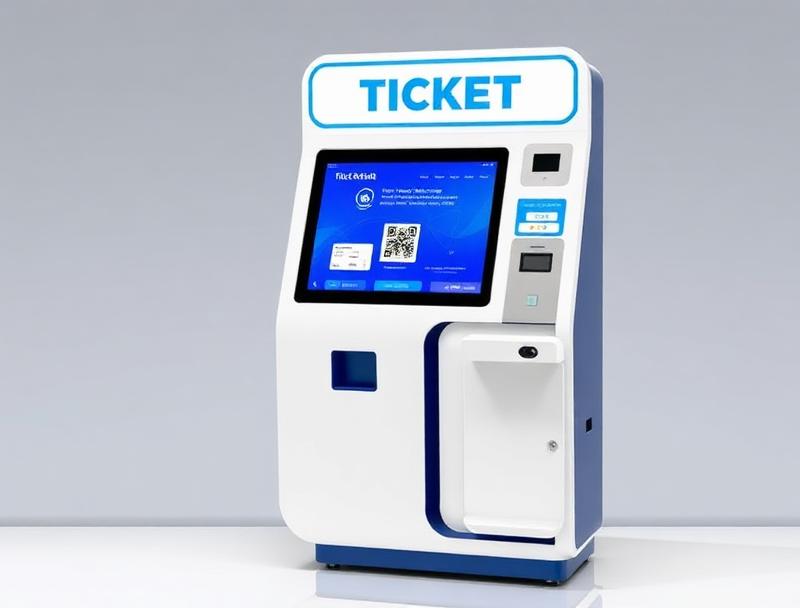
Discover how the digital ticket has evolved in Spain: from paper entry to QR systems, mobile wallets and smart access control that now dominate events, fairs and festivals.
The evolution of the digital ticket in Spain: from paper entry to smart access
In the last ten years, Spain has experienced a radical transformation in the way in which tickets to cultural and sporting events, festivals and municipal fairs are managed.
What previously depended on paper and manual processes is today based ondigital tickets, QR codes, mobile wallets andreal-time validation systems like those promoted by Woolando.
This evolution has not only improved the attendee experience, but has allowed organizers and city councils to optimize costs, reduce queues and haveprecise data on capacity and access.
🟦1. The paper era: queues, duplicates and lack of control
For decades, the paper ticket was the only form of access in Spain.
Although it fulfilled its function, it generated multiple problems:
Duplication of entries.
Impossibility to control the capacity in real time.
High printing costs.
Frequent loss of entries.
Need for staff to visually review each ticket.
It was an inefficient and easily manipulated system.
🟦2. The arrival of the PDF ticket: the first step towards digitalization
Starting in 2010, most promoters and theaters began using PDF tickets sent by email.
This format was a major improvement:
Eliminated paper.
Allowed user self-check-in.
Made online purchasing easier.
However, it still had problems: it was easy to forward, print multiple times or even forge.
🟦3. The QR code revolution
The QR marked a before and after.
In Spain it became popular especially between 2014 and 2018, coinciding with the expansion of smartphones and ticket sales apps.
With a QR ticket:
Validation is instant.
The system detects if the QR has already been used.
Thousands of accesses can be managed per hour.
Capacity is controlled in real time.
Woolando, for example, allows you to validateonline and offline, guaranteeing access even if the venue connection fails.
🟦4. Digital wallets: Apple Wallet, Google Wallet and NFC
Recent years have consolidated the use of mobile wallets as a standard in Spain.
Key advantages:
The ticket is always accessible without opening emails.
Allows live updates (change time, door, etc.).
Access is faster thanks to animations or NFC.
It's harder to duplicate.
Nowadays, many Spanish festivals and museums already offer the ticket directly in Wallet.
🟦5. Absolute integration: ticketing + access control + real-time capacity
The future is already here: modern systems integrate everything in a single environment.
Platforms like Woolando allow:
Issue unique and secure digital tickets.
Validate them at multiple simultaneous points.
Control access by area (VIP, tastings, backstage).
Manage capacity minute by minute.
Generate automatic reports of attendees and input spikes.
This has completely changed the way of managing municipal events and fairs in Spain.
🟦6. The pandemic accelerated the change
Between 2020 and 2022, the digital ticket went from being “convenient” to beingmandatory in many cases.
City councils and organizers adopted contactless systems to:
Avoid handling paper.
Reduce queues.
Register attendees for health reasons.
Since then, the digital ticket has become the definitive standard.
🟩Conclusion: the digital ticket is already the present (and the future) in Spain
Spain has gone from paper to completely intelligent systems in less than ten years.
Today the digital ticket:
Reduces queues.
Avoid fraud.
Improves the attendee experience.
Allows organizers and municipalities to work with real data.
And the trend continues to grow, with advances such as NFC, offline validators, self-sales totems and total access automation.