
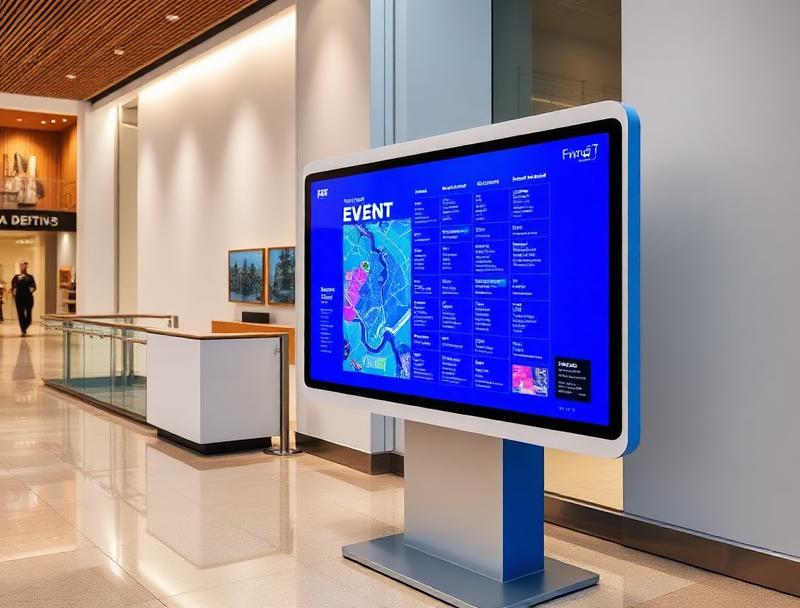
Festival and fair shuttles become a bottleneck when bookings depend on printed lists or crossed messages. With QR bookings and boarding control, transport becomes part of the event's digital operation instead of a separate manual process.
At many festivals, fairs and large venues, the problem does not end at the main gate. Transport between parking areas, campsites, secondary entrances or remote zones often depends on shuttles with heavy demand in very short windows. If booking is handled with printed lists, screenshots or messaging groups, queues simply move to the boarding point.
A QR shuttle booking system makes it possible to assign seats, validate each boarding and coordinate departures by time slot from one platform. Organizers reduce waiting times, avoid overbooking and gain visibility into how attendees move around the event.
1. Why shuttles create so many incidents
Internal transport usually combines several operational risks at once: everyone arrives together, seats are limited, schedules change, stops are spread out and boarding staff is often temporary.
The most common failures are:
Manual lists that are hard to update when a departure sells out
People boarding without a clear reservation or with screenshots that cannot be verified
No real control over how many seats remain on each departure
Arguments in line caused by slot changes or duplicate bookings
Little traceability to know which shuttle each attendee used
When transport is disconnected from ticketing or access control, the event loses the ability to organize one of the most sensitive moments in the attendee journey.
2. How a QR shuttle booking works
Each attendee can receive a unique QR reservation linked to a route, a stop, a departure slot and a maximum number of uses. That QR can be delivered by email, mobile wallet, digital ticket or collected from a kiosk when the operation requires it.
At boarding time, staff validates the code and the system checks instantly:
Whether the booking belongs to that route or time slot
Whether the seat is still active or has already been used
Whether return travel or re-entry is included
Whether vehicle capacity has already been reached
Whether the attendee should be redirected to another available departure
This turns boarding into a measurable process instead of an improvised decision at the queue barrier.
3. Time slots and smoother boarding
One of the main advantages of QR booking is the ability to spread demand across departures. Instead of sending everyone to the same bus at once, organizers can open capacity by time slot, origin zone or attendee type.
This is especially useful for:
Festivals with remote parking or campsite shuttle routes
Trade fairs with buses from stations or park-and-ride areas
Sports events with transfers between fan zone, finish line and parking
Venues with multiple gates and staggered arrival plans
With capacity per slot, attendees know when to board and staff can prepare each departure with a much more realistic demand forecast.
4. What organizers gain in real time
When bookings, boarding and vehicle capacity share the same system, the operations dashboard no longer depends on calls or messages between coordinators.
| Need | Manual workflow | With Woolando |
|---|---|---|
| Seats per departure | Approximate counting | Live visible quotas |
| Reservation validation | Screenshots or lists | Traceable unique QR |
| Incident handling | Queue-side decisions | History and route rules |
| Attendee reassignment | Slow manual changes | Redirect to available departures |
| Post-event reporting | Incomplete data | Boarding logs by slot |
With that visibility it becomes easier to add reinforcement buses, adjust timing and see where the actual bottleneck is forming.
5. Kiosks, staff and control points
Not every attendee arrives with the booking ready and not every environment supports the same flow. That is why it is useful to combine several operating points:
Kiosks or totems: to check a reservation, reprint a ticket or change to another departure
Staff with QR readers: to validate quickly in the queue or at the bus door
Support desks: for incidents, name changes or group handling
The key is not only to digitize the reservation, but to connect every touchpoint so everyone works with the same data.
6. Where this system delivers the most value
QR shuttle bookings bring the most value when transport is part of the attendee experience and not just invisible logistics.
Festivals with campsites, remote parking or multiple access zones
Professional fairs with visitors arriving from stations or hotels
Town councils running special buses for local celebrations or large public events
Sports events with transfers between start, finish and participant pickup points
The larger the audience and the tighter the departure windows, the greater the return from keeping bookings, boarding and reporting inside one platform.
7. Fewer queues outside the venue and a better attendee journey
Attendees do not mentally separate transport from the event itself. If the shuttle fails, the experience has already started badly before they even reach the gate. That is why bus reservations should be managed with the same level of control as a ticket, a credential or a QR access pass.
With Woolando, ticketing, access control, kiosks and QR bookings can work together so festivals, fairs and sports events organize movement as well as entry points.