
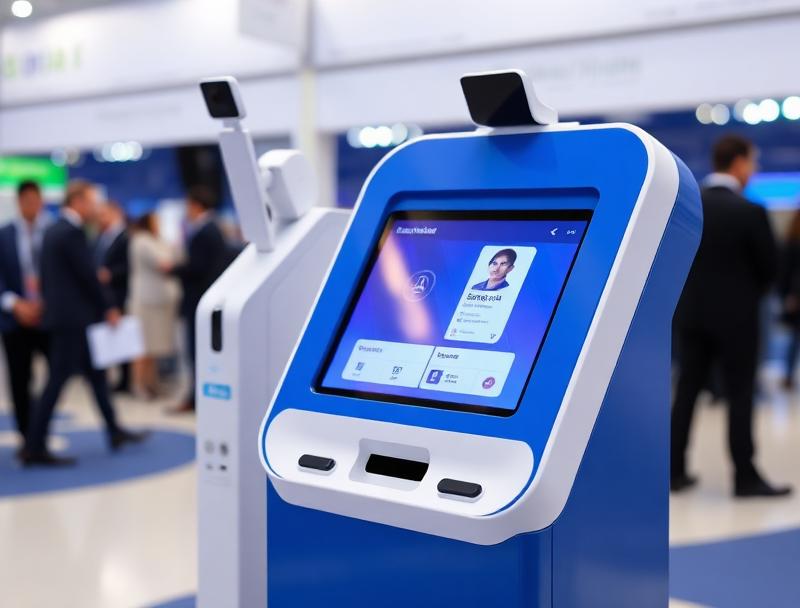
Learn how to run municipal sports tournaments with QR registration, team check-in, kiosks and access control for participants, staff and spectators.
Municipal sports tournaments usually combine several flows at once: pre-registration, team arrival, credential delivery, spectator entry and court staff coordination. When all of that is handled with paper lists, phone calls and manual desks, the opening of the event quickly becomes slow and hard to control.
With a QR registration system for municipal sports tournaments, the town council or organizing club can centralize records, speed up check-in and validate access from one connected platform.
1. Why municipal tournaments get stuck before they start
In youth football, basketball, padel or local tournaments, the same problems tend to repeat:
Teams arriving at the same time and asking where to confirm attendance
Players waiting on documents or last-minute changes
Spectators entering through different gates without a shared count
Staff and volunteers without a clear accreditation flow
Limited visibility over attendance, incidents and schedule delays
Without a digital workflow, any early delay ends up affecting match schedules, family experience and the work of municipal staff.
2. How QR registration linked to check-in works
Each team, participant or companion can receive a unique QR linked to their registration, category, time slot or allowed area. At the entrance or welcome desk, that code is validated from a phone, tablet, scanner or kiosk.
Within seconds, the system can confirm:
Whether the registration was completed correctly
Whether the participant belongs to that tournament or category
Whether the access fits that time slot or venue
Whether check-in was already completed before
Whether companion slots are still pending validation
This removes the dependency on printed lists and lets the event operate with real-time data from the first minute.
3. How kiosks and self-service points help
Many tournaments include players who forget their locator, families who need to confirm registration or teams arriving outside the main rush. A self-service kiosk helps absorb that volume without overloading the main desk.
These points can be used to:
Recover a registration by email, phone number or code
Issue credentials or proof of entry on the spot
Send attendees to the right court or access gate by category
Handle simple changes without slowing everyone else down
Reduce queues at events with many teams and companions
The result is a more orderly reception and a better distribution of support staff.
4. Benefits for town councils, sports departments and clubs
Digitizing registration and entry does more than improve arrival. It also solves very specific management needs:
| Need | Manual handling | With Woolando |
|---|---|---|
| Team check-in | Lists and phone calls | QR validation in seconds |
| Spectator access | Partial counting | Unified control by gate |
| Accreditations | Manual handout | Connected issuance |
| Incidents | No traceability | Record by person and time |
| Analytics | Incomplete data | Real-time dashboard |
This makes it easier to justify resources, reinforce access points at peak times and professionalize tournaments organized by local sports departments or community clubs.
5. What organizers can see during the event
When registrations, accreditations and validations share the same system, organizers gain immediate visibility across the event:
Teams already checked in and teams still pending arrival
Validated participants by category or court
Total spectator and companion attendance
Gates or time slots with the highest congestion
Resolved incidents and rejected entries
With that data, it becomes easier to move volunteers, open a second desk or communicate schedule changes using facts instead of estimates.
6. Where this model adds the most value
QR registration and connected check-in work especially well in:
Youth football tournaments with several pitches and staggered schedules
Municipal basketball, volleyball or handball competitions
Padel or tennis opens with rounds running all day
School races or multisport days with family attendance
Festival-season sports events with rotating spectators
The more access points, categories and people involved, the stronger the benefit of centralizing registration, control and on-site operations.
7. A smoother tournament for participants and organizers
Teams want to arrive, confirm their place and start without delays. Families want clear entry instructions. Staff need to know who has arrived, who can enter and which incidents are still open. QR registration connected to access control solves all of that with less friction and more order.
With Woolando, ticketing, check-in, kiosks and QR validation work together in one platform so every municipal tournament gains speed, control and a better experience for everyone involved.