
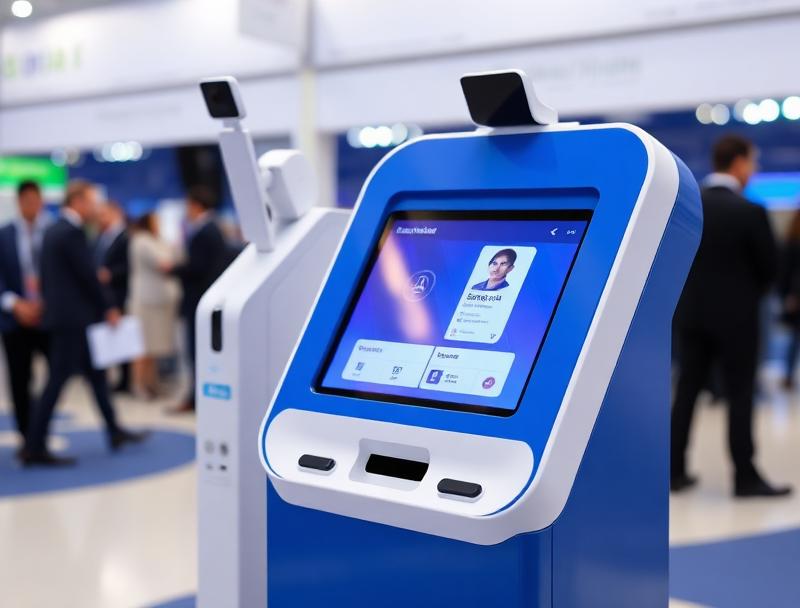
Trade shows want to create useful meetings between exhibitors, buyers and partners, but the agenda starts to break as soon as duplicate slots, slow entry points and confused attendees appear. With QR bookings, timed check-in and connected kiosks, networking becomes an ordered and measurable flow.
Trade shows, sector conferences and B2B events are no longer measured only by the number of visitors. What increasingly matters is the real ability to create useful meetings between exhibitors, buyers, distributors, sponsors and specialist press. When those meetings are coordinated through spreadsheets, scattered emails or overloaded information desks, the experience starts to suffer from the first time block.
A QR booking system for networking lets organisers assign one-to-one meetings, validate participants in seconds and structure time slots, tables or meeting zones from a single connected platform. The result is less improvisation and more meetings that actually happen.
1. Why networking becomes chaotic so easily at a trade show
On paper, building a meeting agenda looks simple. The problem appears when hundreds of participants try to enter the same area, switch contacts, arrive late or need help finding their slot. Without a digital workflow, every small incident multiplies.
The most common issues are:
Overbooking on specific tables or time blocks
Queues at the entrance to the meeting area
Doubt about who has a confirmed appointment and who is on standby
No-shows that are not detected early enough to reassign the slot
Very limited traceability to measure which sectors or profiles generated the most meetings
If control depends on printed lists or staff manually checking names, networking loses value at the exact moment it should be proving its worth.
2. How a QR booking works for one-to-one meetings
Each meeting can be linked to a unique QR associated with a person, a company, a time block and a specific table or zone. That code can be delivered by email, wallet pass or digital badge and validated from a phone, tablet, reader or support kiosk.
In seconds, the system can confirm:
Whether the participant has a confirmed meeting in that slot
Whether check-in has already been completed or is still pending
Whether they can access a premium area, hosted buyer space or sponsored meeting area
Whether they arrived outside the time slot or tried to enter the wrong table
Whether a new assignment is available in case of a no-show
This turns the networking area into a clear operational circuit instead of another point of friction inside the event.
3. Fewer queues and better punctuality in every block
At many trade shows, the problem is not only the general accreditation process. The real bottleneck appears at the start of each meeting round. If every attendee needs to ask at a desk, find their table or manually confirm an appointment, the first part of each slot gets wasted.
With QR bookings and fast validation, organisers can:
Separate access by time block or attendee profile
Speed up entry with readers or support staff
Guide participants to specific tables, zones or rooms
Reduce accumulated delays between meetings
Activate standby lists without rebuilding the entire operation
The faster each participant reaches the assigned space, the more value they get from the agenda and the better the event feels overall.
4. Where kiosks and self-service points fit
Connected kiosks are especially useful when the networking area handles late guests, agenda changes or attendees who cannot find their QR. Instead of sending every issue to a central desk, simple tasks can be resolved without blocking the team.
These points can be used to:
Look up a meeting by email, company or booking reference
Reprint a badge or confirmation slip
Show the assigned table and time block on screen
Register an assisted check-in when the participant arrives without the QR ready
Filter quick incidents before a reception queue starts forming
The key is that the kiosk works from the same data used by access staff and by the organiser back office.
5. What changes when the meeting agenda is connected to the rest of the show
The real improvement appears when networking does not live in isolation. If badges, ticketing, check-in and reporting share data, the organiser can make faster decisions and avoid mistakes between areas.
| Need | Manual handling | With Woolando |
|---|---|---|
| Meeting assignment | Scattered lists and emails | Central agenda by time slot |
| Area access | Name checking | QR check-in in seconds |
| No-shows | Lost opportunities | Faster reassignment |
| Incidents | Improvised resolution | Participant history |
| Final analytics | Weak estimates | Real data by block and profile |
With that foundation, it becomes much easier to see which sectors generated the most demand, which time blocks became saturated and where more tables or staff should be added.
6. Useful metrics for exhibitors, hosted buyers and organisers
A meeting programme only works well if it can be measured afterwards. By digitising bookings and validations, the trade show gains visibility into what actually happened during each day.
Confirmed meetings versus completed meetings
No-show rate by sector, profile or time block
Average access time to the networking area
Attendance peaks by table, room or session block
Incidents solved through kiosks, staff or reception points
These figures help improve the next edition and also provide clearer value arguments for sponsors, institutions or exhibitors who want measurable return.
7. More useful meetings and less operational chaos
Trade show networking should not depend on queues, paper lists or manual checking. When bookings, access control and support points share the same operational base, meetings start on time, empty slots are reused more effectively and the organiser gains real control over one of the most valuable areas of the event.
With Woolando, QR bookings, badges, timed check-in and kiosks can live in a single platform so trade shows turn networking into a more structured, measurable and profitable experience.