
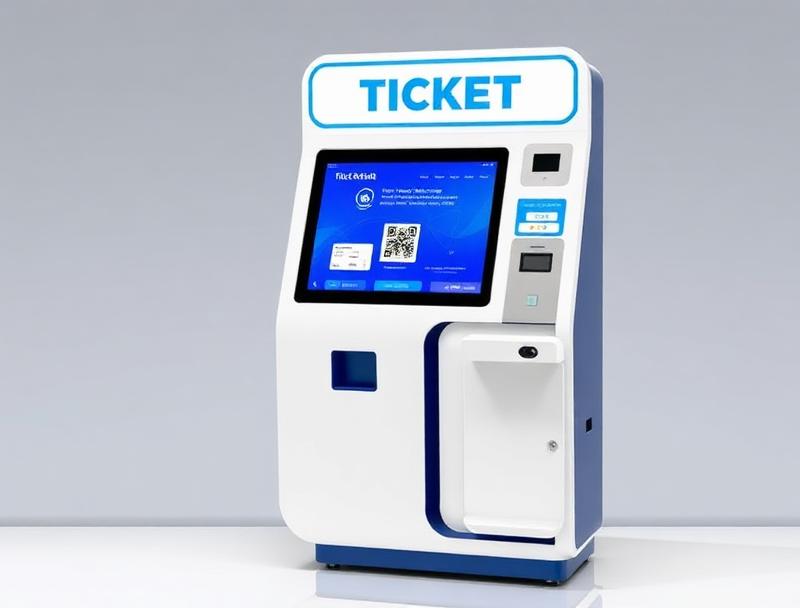
Merch sales often work fine until pickup starts: queues, sold-out sizes, lost tickets and staff searching orders by hand. With click and collect, QR, kiosks and connected POS, festivals and sports events can sell earlier, hand over faster and keep real control over stock and collections.
At many festivals, fan zones and sports events, merchandising sells well online but becomes chaotic when it is time to hand orders over. Attendees arrive in waves, want to collect quickly before kickoff or gate opening, and do not understand why a prepaid order ends up in the same queue as an improvised purchase.
A QR click and collect workflow lets organizers sell shirts, hoodies, scarves or official bundles in advance and deliver them with fast validation through kiosks, assisted desks or POS connected to real stock.
1. Why merchandise pickup becomes a bottleneck
Most incidents do not happen during the sale itself, but during handoff. If the team works with lists, screenshots or unsynced cash points, every small mistake slows the whole line.
The most common issues are:
Long queues to collect orders that were already paid
Sizes or products sold without real stock visibility
Uncertainty about whether a QR was already redeemed or is still pending
Incomplete orders caused by poor pre-event preparation
Slow incident handling when the buyer cannot find the locator
When pickup is disconnected from the sales system, merchandising loses margin and creates a far less professional experience.
2. How QR click and collect works
Each purchase can generate a unique QR linked to the order, reserved items, collection point and a specific time slot. That code can be validated from a phone, scanner, kiosk or POS, and the system updates order status instantly.
In seconds, the team can confirm:
Whether the order is paid and ready for pickup
Whether it belongs to that collection point or another area
Whether the QR was already redeemed or is still pending
Which size, color or bundle must be delivered
Whether there is an incident, exchange or operational note attached
This turns pickup into a traceable workflow instead of a manual search one order at a time.
3. Fewer queues before gates open or the match begins
One of the biggest advantages is separating the purchase from the busiest moment. If the fan buys earlier and only needs to validate a QR to collect, the merch point can move far more people in a short window.
This model fits especially well in:
Festivals with heavy peaks at gate opening and between shows
Sports events with pickup before kickoff or during halftime
Fan zones offering official bundles, scarves or commemorative cups
Fairs and municipal events combining ticketing, concessions and product sales
The less time the team spends charging payments and locating orders, the faster the queue rotates and the better the attendee experience stays.
4. What changes when POS, stock and pickup share data
The real improvement is not just printing a QR, but making stock, sales and handoff work with the same data. Organizers know what was sold, what was reserved and what already left the pickup desk.
| Need | Manual approach | With Woolando |
|---|---|---|
| Advance sales | Separate order lists | QR linked to each purchase |
| Stock control | Partial counting | Synchronized availability |
| Pickup handoff | Manual lookup | Fast QR redemption |
| Incidents | Calls and messages | Order-level history |
| Final reporting | Rough estimates | Data by product and time slot |
With that base, it becomes easier to prepare products in advance, reinforce the right point and detect where exchanges or stock issues are happening.
5. Where kiosks and assisted points fit
Connected kiosks help when part of the audience arrives without the QR ready, wants to check an order or needs a reprint. Instead of routing everything through one main counter, simple tasks can be distributed while the fast pickup lane stays clean.
Order lookup: find purchases by email, phone or locator
Reprint: recover a receipt in seconds
Last-minute sales: close extra purchases without mixing every flow together
Incident diversion: separate changes and doubts from the quick pickup queue
The key is that kiosk, POS and collection desk all use the same live order status rather than outdated copies.
6. Useful data to improve the event store
Digitizing pickup gives organizers clearer visibility into which products perform best and how the operation behaves during each event window.
Orders handed over by time slot
Average pickup times
Top-demand products by point or day
Pending, canceled or incident-tagged orders
Additional sales generated at kiosks or POS
With this information, the team can redesign assortments, reinforce one area or open another pickup point in future editions.
7. More pre-sales and a far more orderly pickup process
Merchandising becomes more profitable when attendees buy early and collect without friction. To make that happen, online sales alone are not enough. The event needs a connected workflow that controls stock, QR, pickup and payments in the same environment.
With Woolando, click and collect, kiosks, POS and handoff control can work on one platform so festivals and sports events sell more merchandising with fewer queues, fewer mistakes and better traceability.